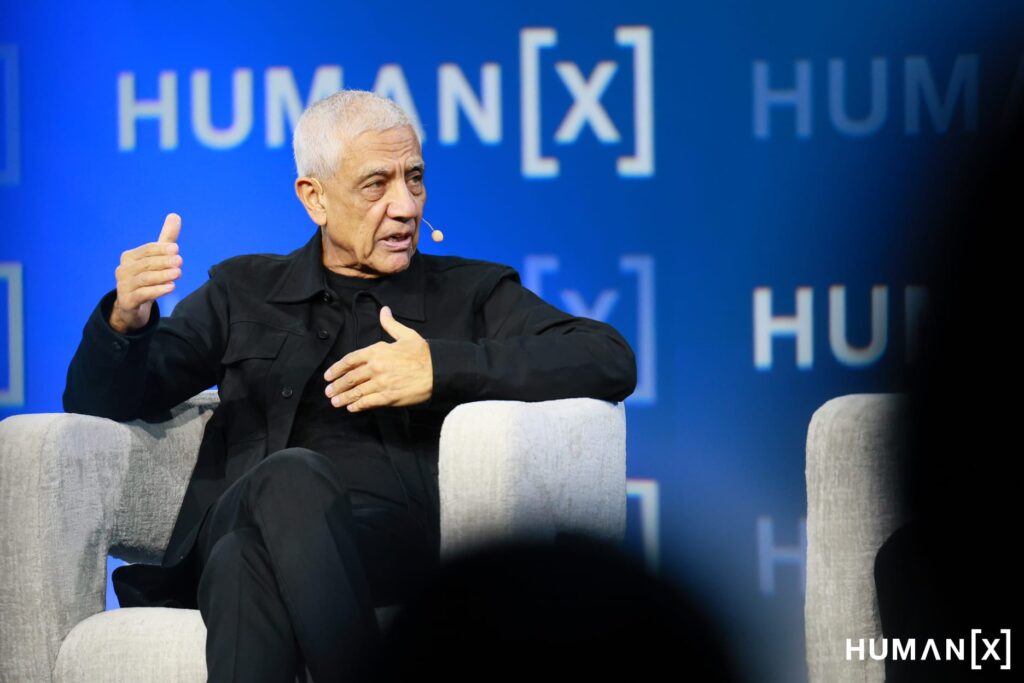
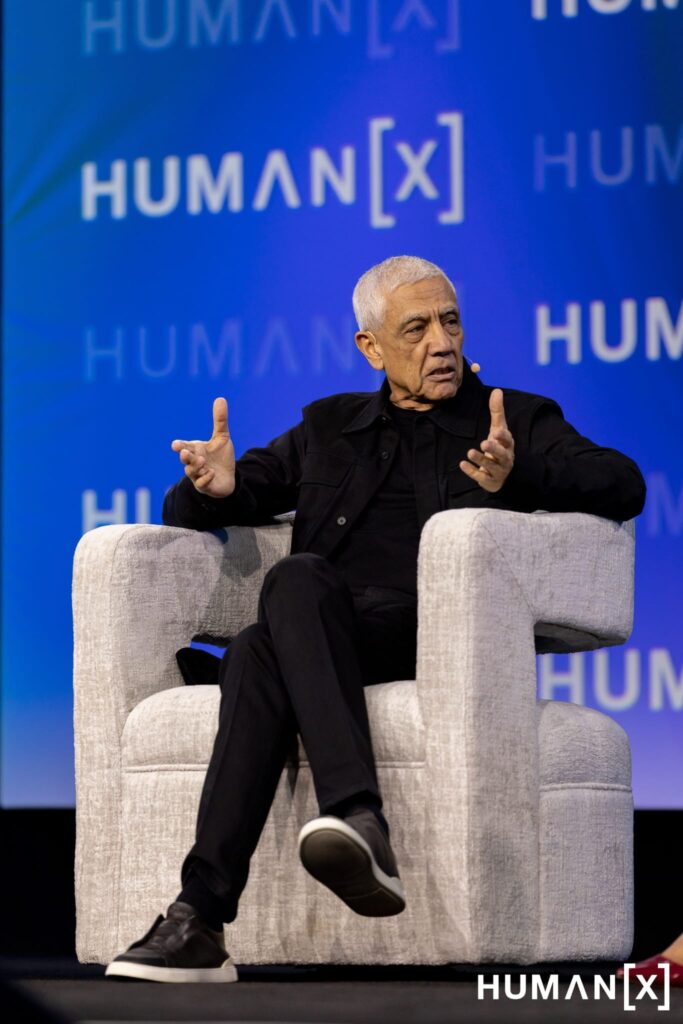
At HumanX 2026, the veteran Silicon Valley investor argued that the future of enterprise AI will be determined not by increasingly intelligent models, but by systems organizations can trust.
For much of the past three years, the artificial intelligence industry has measured progress by a familiar set of metrics: larger models, stronger reasoning capabilities, and ever-higher benchmark scores. Yet at HumanX 2026 in San Francisco, venture capitalist Vinod Khosla challenged that narrative with a different proposition.
Speaking during the session Super Reliability vs. Super Intelligence, Khosla argued that the defining challenge for enterprise AI is no longer raw capability. Instead, it is reliability—the ability of AI systems to consistently produce correct, trustworthy results when deployed in real business environments.
When intelligence isn’t enough
Khosla described a growing disconnect between the impressive demonstrations of modern large language models and the demands of enterprise deployment. While today’s AI systems can generate sophisticated responses, he argued that businesses ultimately judge technology by whether it performs reliably in production.
He pointed to customer service as an example, noting that many AI applications are built on language models that can hallucinate. In industries where systems interact with sensitive information such as financial accounts or medical records, even relatively low error rates become unacceptable because incorrect information can have serious consequences.
His conclusion was straightforward: enterprise customers care most about reliability.
The enterprise adoption gap
Another theme emerging from the discussion was what Khosla characterized as one of the largest missed opportunities in artificial intelligence.
According to Khosla, current AI capabilities exceed the level of deployment seen across many organizations. The limiting factor is not necessarily that models lack intelligence, but that businesses remain unable to trust them for critical operations requiring consistent accuracy.
The implication for executives is significant. Rather than asking whether AI has become sufficiently capable, organizations should ask whether their chosen systems can operate dependably under real-world conditions.
Why reliability becomes a competitive advantage
As AI agents evolve from answering questions to performing business actions, reliability becomes increasingly important.
The HumanX discussion highlighted the challenge facing enterprises: a conversational mistake may inconvenience a user, but an incorrect action involving customer accounts, healthcare information, or regulated processes can create operational and compliance risks.
For Khosla, this changes how enterprise AI should be evaluated. Success is not defined solely by how intelligently a model appears to respond, but by whether organizations can confidently deploy it at scale.
Where long-term value will be created
Khosla also shared his investment perspective on where durable value in artificial intelligence is likely to emerge.
Rather than emphasizing companies that simply build applications on top of publicly available foundation models, he argued that businesses developing differentiated technology through original research and engineering are better positioned to create lasting competitive advantages.
It is a philosophy consistent with Khosla Ventures’ long-standing investment approach: technological differentiation remains the foundation for sustainable value creation.
A new benchmark for enterprise AI
The HumanX conversation suggested that the AI industry may be entering a new phase of maturity.
For several years, discussion has centered on how intelligent AI systems can become. Khosla proposed that the next stage will be measured differently: by whether organizations can trust AI to perform reliably in production environments where mistakes carry meaningful consequences.
That perspective reframes one of the industry’s biggest questions. The future of enterprise AI may depend less on building increasingly intelligent systems than on building systems enterprises are willing to trust.
For business leaders evaluating AI investments, Khosla’s message was clear: intelligence may attract attention, but reliability is what ultimately enables adoption at enterprise scale.