
By Tetiana Pochetova – Journalist
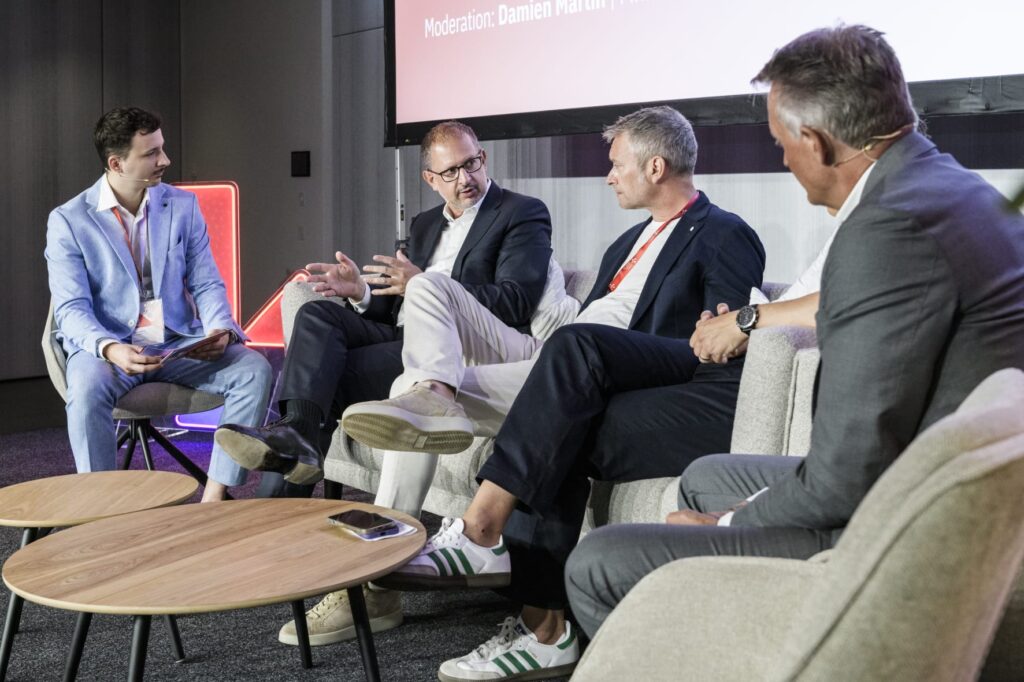
Zurich, Switzerland — Held from 23 to 25 June 2026, Point Zero Forum brought together the architects of tomorrow’s financial system. Far more than a fintech conference, the Forum has established itself as a premier global platform where government leaders, central bankers, financial regulators, institutional investors, and technology pioneers convene to shape the future of the global financial ecosystem.
As financial markets undergo profound change driven by artificial intelligence, digital assets, tokenisation, and new regulatory frameworks, Point Zero Forum has established itself as one of the most influential international platforms for dialogue between the public and private sectors.
The 2026 programme reflected this unique position, featuring an exceptional line-up of policymakers, central bank leaders, banking executives, and innovators shaping the future of finance.
The Forum opened with high-level discussions led by Karin Keller-Sutter, Switzerland’s Federal Councillor and Head of the Federal Department of Finance, alongside Maria Luís Albuquerque, European Commissioner for Financial Services and the Savings and Investments Union. Their participation underscored the growing importance of international regulatory cooperation as financial markets become increasingly interconnected.
Representing Asia’s dynamic financial landscape, Alvin Tan, Singapore’s Minister of State, highlighted the country’s continued leadership in digital finance and financial innovation.
Among the most anticipated voices was Agustín Carstens, former General Manager of the Bank for International Settlements (BIS), whose longstanding influence on global monetary policy continues to shape international discussions surrounding digital currencies, financial stability, and the future of cross-border payments.
The Forum also welcomed some of the world’s most influential central banking officials. Sarah Breeden, Deputy Governor of the Bank of England, addressed the evolving relationship between monetary policy and technological innovation. Piero Cipollone, Member of the Executive Board of the European Central Bank, contributed to discussions surrounding the Digital Euro and the future of European payment infrastructure. Switzerland was represented by Antoine Martin, Vice Chairman of the Swiss National Bank, and Marlene Amstad, Chair of the Swiss Financial Market Supervisory Authority (FINMA), while Carolyn Rogers, Senior Deputy Governor of the Bank of Canada, and Burkhard Balz, Member of the Executive Board of the Deutsche Bundesbank, added global perspectives on financial resilience and innovation.
While regulators discussed policy, industry leaders demonstrated how innovation is reshaping financial markets.
One of the most closely watched sessions featured Sergio P. Ermotti, Group CEO of UBS, who explored the intersection of artificial intelligence, banking, and Switzerland’s role as a global financial centre. As head of one of the world’s largest wealth managers, Ermotti offered valuable insights into how traditional financial institutions are adapting to technological transformation.
Digital assets remained one of the Forum’s dominant themes.
Paolo Ardoino, Chief Executive Officer of Tether, addressed one of the Forum’s central themes: the evolution of programmable money and stablecoins as critical components of next-generation financial infrastructure. Building on ideas he has discussed at major international conferences in recent years, Ardoino examined how digital assets are reshaping global payments, financial inclusion, and the broader architecture of digital finance.
Equally anticipated was Adam Back, Chief Executive Officer of Blockstream and one of Bitcoin’s earliest cryptographers. Back examined the continued evolution of Bitcoin within institutional finance, discussing digital asset infrastructure, security, and the growing participation of global financial institutions in blockchain-based markets.
The institutionalisation of crypto assets was further explored by Lawrence Calcano, Chairman and Chief Executive Officer of iCapital, whose company has become a global leader in alternative investment technology. His perspective demonstrated how private markets, wealth management, and tokenisation are converging to create entirely new investment ecosystems.
Legal and regulatory aspects of blockchain innovation were addressed by Stu Alderoty, Chief Legal Officer of Ripple, while Dante Disparte, Chief Strategy Officer and Head of Global Policy at Circle, examined the rapidly evolving landscape for stablecoin regulation and global digital payments.
The Forum also featured contributions from Simone Maini, Chief Executive Officer of Elliptic, discussing blockchain intelligence and financial crime prevention, and René Michau, Global Head of Digital Assets at Standard Chartered, who explored institutional adoption of digital assets within the traditional banking sector.
Artificial intelligence emerged as another defining theme throughout the conference. Financial institutions increasingly recognise AI not simply as a productivity tool, but as foundational infrastructure capable of transforming risk management, compliance, investment analysis, cybersecurity, and customer experience. Industry experts examined how machine learning is becoming embedded across virtually every layer of financial services.
Across three days of discussions, several recurring themes defined the agenda:
Perhaps the defining characteristic of Point Zero Forum is its ability to bring together participants who rarely share the same stage. Ministers debate alongside fintech founders. Central bank governors exchange perspectives with blockchain entrepreneurs. Global regulators engage directly with executives building the next generation of financial infrastructure.
Unlike investment conferences focused primarily on capital markets or startup events centred on entrepreneurship, Point Zero Forum occupies a unique position at the intersection of policy, finance, and technology.
As governments develop new regulatory frameworks, financial institutions embrace digital transformation, and blockchain technology moves steadily into mainstream finance, the conversations taking place in Zurich are increasingly shaping decisions that will influence global markets for years to come.
Point Zero Forum 2026 reaffirmed its status as one of the world’s leading gatherings for financial innovation—a forum where the future of money, banking, and digital infrastructure is not merely discussed, but actively designed.












Copyright © 2026 VANITY VIP Magazine. All rights reserved
We use cookies to improve your experience on our site. By using our site, you consent to cookies.
Manage your cookie preferences below:
Essential cookies enable basic functions and are necessary for the proper function of the website.
These cookies are needed for adding comments on this website.