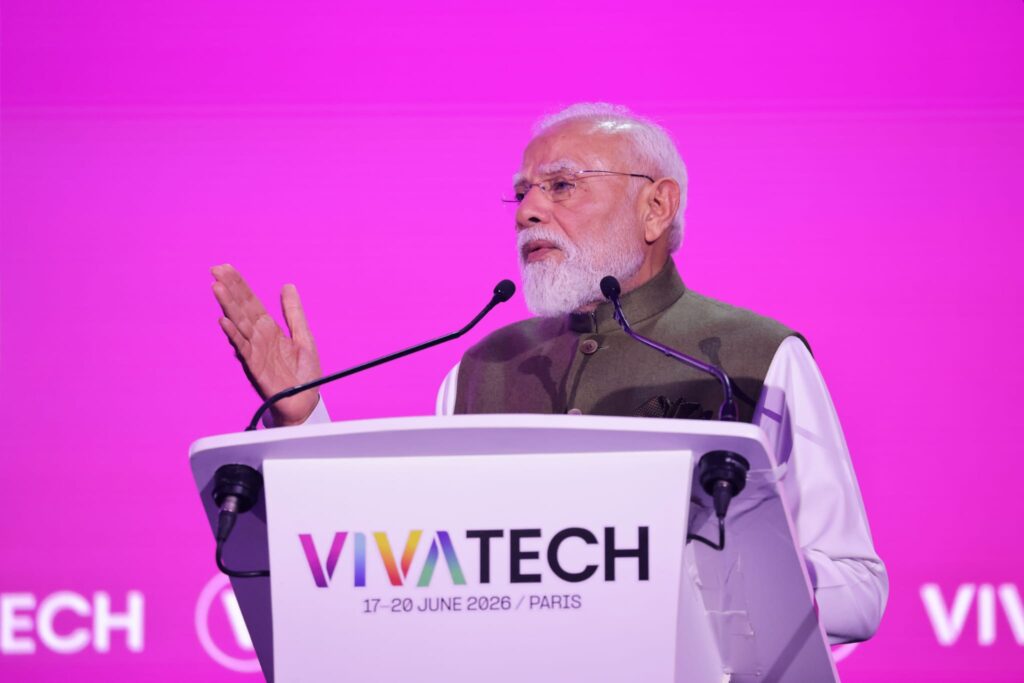
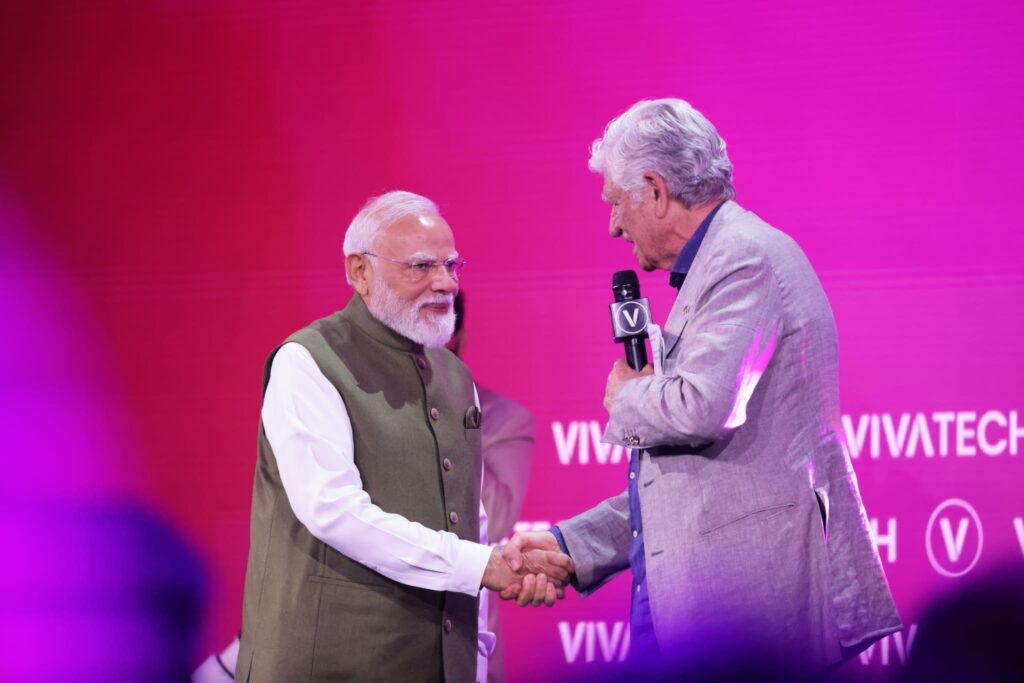
Prime Minister Narendra Modi’s address at VivaTech 2026 presented India’s vision for technology-driven development with a strong emphasis on inclusion, innovation, and global collaboration. Speaking to an international audience of innovators, entrepreneurs, and technology leaders, he highlighted India’s digital transformation and called for technological progress that benefits all sections of society.
A defining message of the address was the interpretation of AI as “All Inclusive.” The Prime Minister emphasized that technological advancement should extend its benefits to every citizen rather than remain limited to a select few. According to the vision presented in the speech, innovation must address real-life challenges and improve the quality of life for people across communities.
He noted that artificial intelligence has the potential to strengthen sectors such as healthcare, agriculture, education, and governance by making services more accessible, efficient, and responsive to people’s needs.
The Prime Minister described India’s rapid digital transformation as a foundation for innovation. He highlighted the country’s digital public infrastructure, including digital identity, digital payments, and technology-enabled public services that have expanded access and participation.
He referred to the success of the Unified Payments Interface (UPI) as an example of how technology can simplify daily life while promoting financial inclusion. India’s digital ecosystem, he noted, has created opportunities for citizens, businesses, and entrepreneurs alike.
The address underscored the growing strength of India’s innovation ecosystem. The Prime Minister spoke about the country’s expanding startup landscape and the role of young innovators in developing solutions for contemporary challenges.
He emphasized that innovation should not be limited to technological advancement alone but should also contribute to solving problems in areas such as agriculture, healthcare, education, and public service delivery.
Throughout the speech, the Prime Minister reiterated that technology is most meaningful when it serves society. He stressed that innovation should improve governance, expand access to essential services, and create opportunities for inclusive growth.
The address presented digital technologies as instruments for empowering citizens and supporting national development while ensuring that the benefits of innovation reach every section of society.
Another important theme of the speech was international cooperation. The Prime Minister invited innovators, entrepreneurs, researchers, investors, and technology leaders from around the world to collaborate with India in developing solutions for shared global challenges.
He emphasized that innovation flourishes through partnership and expressed India’s readiness to work with the global community in advancing technologies that create positive outcomes for humanity.
The address concluded with a call to harness technology for the collective good. The Prime Minister reaffirmed India’s commitment to innovation that is inclusive, accessible, and people-centric. His message highlighted the importance of combining technological advancement with social responsibility so that progress creates opportunities for everyone.
The speech at VivaTech 2026 presented India’s vision of innovation as one that places people at its centre, encourages collaboration across borders, and seeks to ensure that the benefits of technology are shared widely. Through this approach, the Prime Minister conveyed that the future of innovation should be guided not only by technological capability but also by its capacity to improve lives and contribute to inclusive development.


Copyright © 2026 VANITY VIP Magazine. All rights reserved
We use cookies to improve your experience on our site. By using our site, you consent to cookies.
Manage your cookie preferences below:
Essential cookies enable basic functions and are necessary for the proper function of the website.
These cookies are needed for adding comments on this website.